
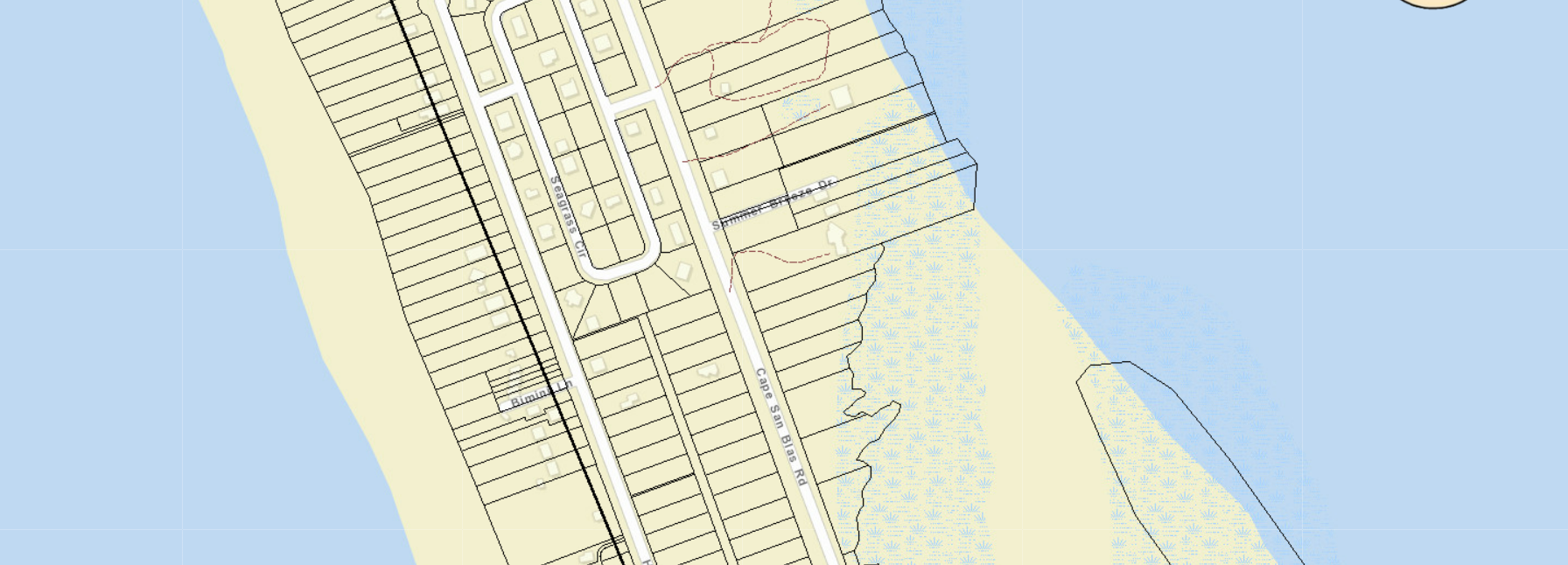
Do you need a CCCL permit to build or remodel on a Gulf front lot on the Forgotten Coast?
If your work sits seaward of the Coastal Construction Control Line, you generally need a permit from the Florida Department of Environmental Protection, though several categories of work are exempt outright. The control line is a jurisdictional boundary, not a building prohibition. New homes, additions, remodels, and repairs are all allowed seaward of it, and a general permit offers a streamlined path for a single family house sited landward of the mapped general permit line.
By Billy Joe Smiley | September 17, 2026
A buyer called me last spring about a Gulf front lot on Cape San Blas. Beautiful parcel, good dune, the right side of the road. Then somebody told him the property was "seaward of the CCCL," and he heard that as "you can't build there." He almost walked away from a lot he could absolutely have built on.
That misunderstanding costs people good property every year, so I want to clear it up. The Coastal Construction Control Line is a permitting boundary. It marks the landward edge of the state's authority to review coastal construction, which is a very different thing from a line you cannot build past.
What the control line is, and what it is not
Under Section 161.053 of the Florida Statutes, the CCCL defines the portion of the beach and dune system subject to severe fluctuations from a one hundred year storm. Landward of the line, the state's coastal program has no jurisdiction. Seaward of it, DEP reviews the siting and design of what you propose. In DEP's own words, control lines should not be confused with setback lines or lines of prohibition. New construction, additions, remodeling, and repairs to existing structures are all allowed seaward of the control line as long as they are permitted or exempt.
Gulf County has its own history with this line. The county maintains a CCCL reference map and published a Coastal High Hazard Study, and property owners on the Cape were notified directly when the line was re-established. If you own or are buying along the peninsula, that map is worth pulling before you plan anything.
Here is the part that surprises people, and it's the good news. DEP's own data on Hurricane Opal, which remains one of the most destructive coastal storms in Florida history, tells the story plainly. Of the 1,992 major habitable structures the storm impacted, 768 were destroyed. Of the 576 structures that had been permitted through the CCCL Program, 2 were destroyed. That's two tenths of one percent. The 2004 and 2005 seasons confirmed the pattern. DEP also notes that having property within CCCL jurisdiction does not affect an owner's ability to obtain insurance and may improve it, because federal flood insurance pricing recognizes state coastal construction standards.
So the permit is not an obstacle course. It's the reason the house is still standing.
What is exempt, and what needs a permit
A meaningful amount of ordinary work seaward of the line is exempt by rule. The exemptions that matter most to the buyers and owners I work with:
- Work inside the existing foundation. Modifications, maintenance, or repairs to an existing structure that stay within the limits of the existing foundation and do not involve the foundation itself are exempt. That covers a great many interior remodels.
- Repairs to a pile supported foundation. Replacing bolts, hurricane straps, secondary members, and shore normal cross bracing is exempt. On an elevated coastal home, that is most of your routine structural maintenance.
- Certain minor structures and maintenance. Driveways, water wells, and irrigation wells located in the landward shadow of an existing habitable major structure. Swimming pool maintenance that involves no excavation, and paved area maintenance, when located at least 30 feet landward of the frontal dune, escarpment, or armoring. Landscape plantings at least 30 feet landward that do not disturb existing grade or native salt tolerant vegetation.
- Not exempt. Seawalls and other rigid armoring, and any addition or enclosure added below the first dwelling floor of an existing structure. Those two come up constantly, so plan around them.
When you do need a permit, there is a streamlined path worth knowing about. DEP issues general permits for single family houses, decks, garages, and similar projects sited well upland from the beach and sensitive dunes. DEP has mapped general permit lines identifying the areas that qualify, viewable on the department's interactive mapping site. Multi-family residences do not qualify for a general permit and go through the individual review process, which is a longer road.
I am not going to hand you a number of days, because nobody who has actually been through this can. What I will tell you is that the general permit route is the shorter road, and that the single best thing you can do is get your application in early and complete. A lot of what people experience as a slow permit is really a request for more information that sat waiting on a drawing somebody had not produced yet. Line up your engineer or architect first and you take most of that risk off the table.
The 30-year erosion projection, and rebuilding
This is the piece that actually decides some Gulf front parcels, and it's the one to check first.
The 30-year erosion projection line is where DEP projects the seasonal high water line will sit on your specific property thirty years after you apply. It is calculated from documented historical shoreline change for that stretch of coast, and DEP will provide the location. Where there are substantial seawalls, the projection stops at the seawall.
Major structures generally are not eligible for a CCCL permit seaward of that projection, with a specific carve-out: coastal and shore protection structures, and single family dwellings that meet the siting requirements in Section 161.053(5), which in practice means siting the house as far landward on the parcel as is practicable without putting it seaward of or on the frontal dune. So a single family home on a Gulf front lot has a path that a condominium building does not.
On rebuilding, there is no prohibition against rebuilding seaward of the control line. A structure damaged or destroyed by a storm may be rebuilt if the reconstruction is otherwise eligible for a permit. Existing structures can be moved farther landward or onto an improved foundation. The one real limit: a structure rebuilt seaward of the 30-year erosion projection line may not enlarge the capacity of the original structure. If your plan involves adding square footage to an older Gulf front home in that band, find that out before you're under contract, not after.
How to check a parcel before you write the offer
This is the sequence I run with buyers looking at Gulf front and near-front property from the Cape down through Mexico Beach and over to St. George Island. Most of it costs nothing.
- Locate the line. DEP's Map Direct interactive mapping shows the CCCL and the general permit lines. Gulf County's reference map is a useful cross-check for peninsula parcels.
- Get the survey, and get it delineated. Florida law requires a seller of CCCL-affected land to disclose that fact, in the contract or in a separate written instrument, and unless the buyer waives it in writing, to provide either an affidavit or a survey showing where the control line falls on the property. Do not waive that. It is the cheapest clarity you will ever get.
- Ask DEP for the 30-year erosion projection for that parcel, and ask whether the buildable area sits landward of a general permit line.
- Talk to a designer early. Major structures seaward of the line must be designed to resist the forces of a one hundred year storm, and a Florida-registered engineer or architect certifies to the county building official that the plans meet Section 3109 of the Florida Building Code. Elevated pile foundations, hurricane rated windows, and breakaway walls on the lowest level add cost over conventional construction. Price that into your offer rather than discovering it later.
- Plan for lighting and vegetation conditions. Exterior lighting visible from the nesting beach has to be shielded or designed not to disturb nesting marine turtles, tinted glass is required on beach-facing windows and doors, and native dune vegetation removed during construction generally has to be replaced. These are design decisions, not deal breakers, and they are much cheaper to make at the drawing stage.
Two of my other posts pair naturally with this one. If you're evaluating a raw parcel, start with what to check before buying vacant land on the Forgotten Coast, which covers access, utilities, and septic feasibility. And if the parcel is near the north end of the peninsula, the beach nourishment and breakwater project on St. Joseph Peninsula is worth understanding, because the shoreline in that stretch has changed recently.
Frequently Asked Questions
Does being seaward of the CCCL mean I cannot build?
No. The control line is a jurisdictional boundary marking where DEP reviews coastal construction, not a setback line or a line of prohibition. New construction, additions, remodeling, and repairs are all allowed seaward of it. What changes is that the project needs a DEP permit unless it falls under one of the rule exemptions, and that siting and design standards are stricter than they are farther inland.
How long does a CCCL permit take?
Nobody can give you a firm number, and you should be skeptical of anyone who does. General permits, available for single family houses, decks, garages, and similar projects sited landward of a mapped general permit line, are the shorter road. Multi-family residences and projects that do not meet those criteria go through individual permit review, which takes longer. Plan on the review including at least one request for additional information, get your engineer or architect engaged before you apply, and talk to your builder about timing before you set a closing date.
Can I remodel an existing beach home without a CCCL permit?
Often yes. Modifications, maintenance, or repairs that stay within the limits of the existing foundation and do not involve work on the foundation itself are exempt, as are repairs to a pile supported foundation such as replacing bolts, hurricane straps, secondary members, and shore normal cross bracing. Two things are specifically excluded from that exemption: seawalls and other rigid armoring, and any addition or enclosure added below the first dwelling floor.
What is the 30-year erosion projection line?
It is DEP's projection of where the seasonal high water line will sit on your property thirty years after the date of your permit application, calculated from documented historical shoreline change. Major structures generally cannot be permitted seaward of it, with an exception for coastal and shore protection structures and for single family dwellings that meet the siting requirements of Section 161.053(5), which means placing the home as far landward on the parcel as is practicable without sitting seaward of or on the frontal dune.
Does a seller have to tell me the property is affected by the CCCL?
Yes. Florida law requires a seller of land affected by a coastal construction control line to disclose that fact to the buyer, either in the contract for sale or in a separate written instrument. Unless the buyer waives it in writing, the seller must also provide an affidavit or a survey delineating the location of the control line on the property. I recommend taking the survey rather than waiving it.
Gulf front property here is worth owning, and the permitting is far more navigable than its reputation. If you're looking at a lot or a home on the Cape, at Indian Pass, in Port St. Joe, or anywhere along this coast and you want to know where the control line falls on that specific parcel before you commit, call or text me at (850) 340-1213. I'll help you pull the mapping, tell you what to ask the seller for, and connect you with the surveyor and designer who do this work here every week.
I'm a real estate broker, not a surveyor, engineer, or permitting official. CCCL permitting decisions are made by the Florida Department of Environmental Protection, and building permits are issued locally. Statutory and rule details here reflect Section 161.053, F.S., and DEP program guidance as published as of September 2026. Confirm the specifics for your parcel with DEP and your licensed professionals.
Billy Joe Smiley is one of Florida's most accomplished real estate professionals, with over 27 years of experience and more than 1,000 properties sold. As a top 1% REALTOR® based at Port Realty Group, Billy Joe serves the Forgotten Coast with unmatched insight, professionalism, and care. He works with buyers and sellers across Port St. Joe, Cape San Blas, Mexico Beach, and St. George Island, specializing in luxury and waterfront homes, investment properties and 1031 exchanges, beachfront and bayfront land, vacation homes and income-producing real estate, and real estate development and architectural planning. A Gulf County native, Billy Joe pairs deep local knowledge with decades of experience in brokerage, land development, custom home building, and architectural consulting. Recognized as The Forgotten Coast's Most Trusted Realtor, Billy Joe has earned 90+ public reviews across Zillow, Google, and Realtor.com.
Enjoy this blog post? Click here to subscribe for updates
Leave A Comment