
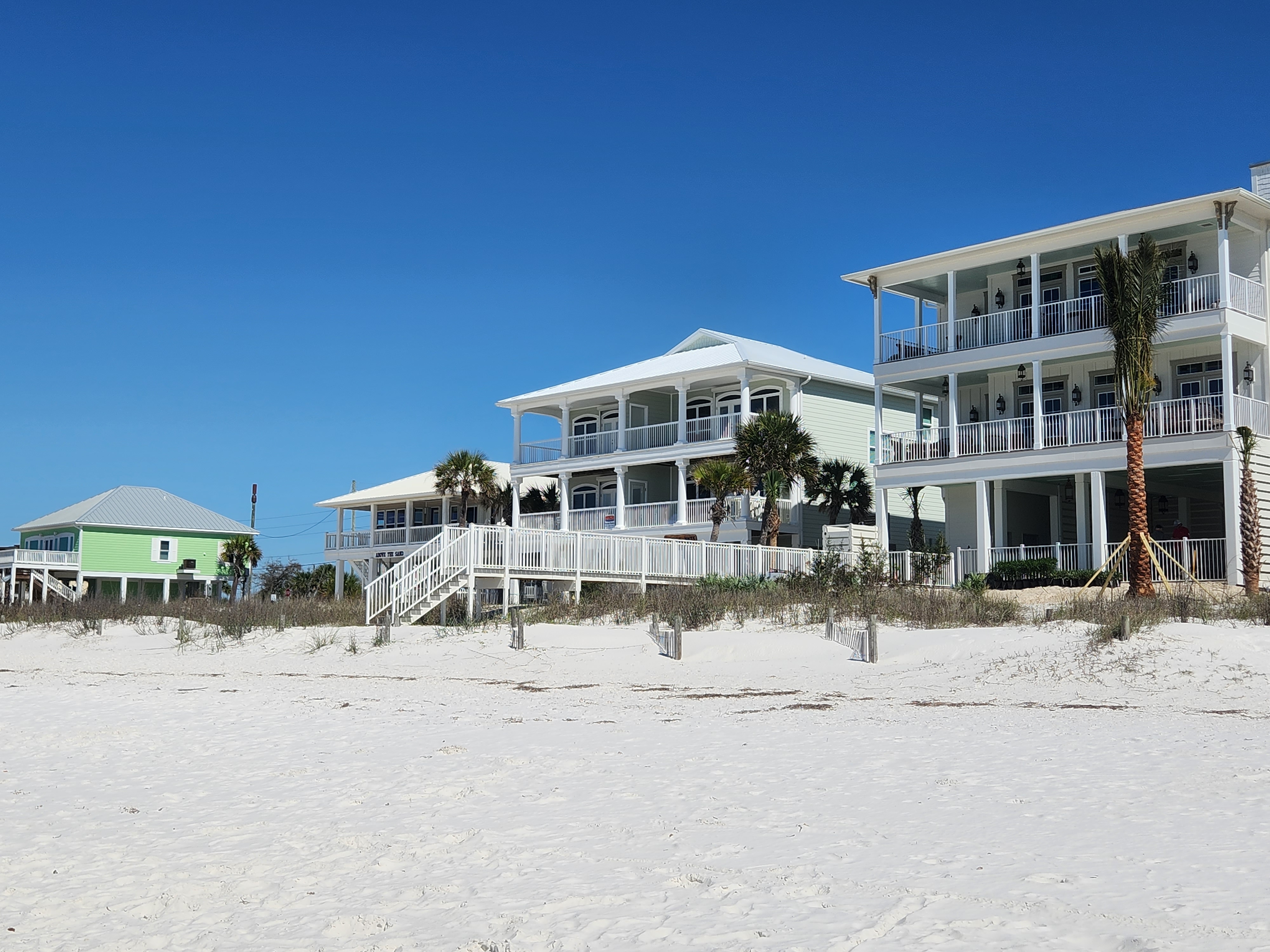
Does "beach access" on a listing actually mean you have a legal right to the beach?
Sometimes, and it is worth confirming exactly which kind before you write an offer. Deeded access is a recorded easement in the property's chain of title, spelling out a specific path to the water that transfers with the home. Public access is a government-maintained crossover open to everyone, reached from a public right of way rather than through a recorded right tied to your parcel. A title search during your due diligence period settles the question in writing, so you know precisely what you are buying rather than assuming it from the listing photos.
By Billy Joe Smiley | July 30, 2026
I get some version of this question every time a buyer falls for a home that is a short walk from the Gulf instead of sitting right on it. The listing says "beach access," the photos show white sand and dunes just beyond the yard, and everyone assumes that means the same thing a deed does. It usually does not, and understanding the difference before you write an offer is one of the easier, more satisfying pieces of due diligence you will do on this coast, because it has a clean, confirmable answer. After 27 years walking buyers through this on Cape San Blas, Port St. Joe, and every stretch of the coast in between, I can tell you the buyers who are happiest a year later are the ones who knew exactly what right they owned before they closed, not after.
Here is how to read a listing's access claim like a real estate professional, what Florida law actually says about who owns what sand, and the one document that turns "I think we have access" into "I know we have access."
Deeded access, public access, and the difference that matters
Deeded beach access is a recorded easement, meaning it is written into the property's chain of title or referenced on the recorded plat, and it describes a specific, defined path across a specific piece of land to reach the water. It might be exclusive to a small handful of owners who share it, or it might be a wider easement serving an entire subdivision. Either way, because it is recorded, it transfers with the home when you buy it, on whatever terms the original document set, whether that is pedestrian use only, certain hours, or shared maintenance costs for the boardwalk or dune crossover. A title search will surface it every time, which is exactly why that search matters so much here.
Public access is a different animal entirely. These are the crossovers and parking areas that Gulf County or the state maintains and opens to anyone, resident or visitor. On Cape San Blas, Salinas Park is a good example, a genuinely nice spot with both Gulf beach access and St. Joseph Bay access in one location. A public access point is a wonderful amenity to live near, but it is not a right that attaches to your specific parcel the way a deeded easement does. You are using it the same way every visitor to the Cape does, which is completely fine, it just is not the same legal animal as an easement running with your title.
Then there is the phrase that causes the most confusion of all: "beach access nearby." That is marketing language, not a legal term, and it can mean anything from a genuine deeded easement forty feet from the property line to a public crossover a half mile down the road that any renter or homeowner could use anyway. It is not dishonest, it is just imprecise, and imprecise is exactly the kind of thing worth nailing down before you are emotionally attached to a home.
Where the actual property line sits, and why the tide matters
Florida draws the line between public and private beach at the mean high water line, which is the average height of high tide calculated over a nineteen year tidal cycle. Everything seaward of that line, the wet sand, is public under Florida's public trust doctrine, full stop, no matter who owns the dry sand above it. The dry sand landward of that line, where you actually set up your chairs and umbrella, can be privately owned depending on the property's history and platting.
That distinction matters because it explains why a stretch of beach can look completely open and public while a specific dry-sand parcel along it is technically private property. It also explains a 2018 Florida law, Section 163.035 of the Florida Statutes, that changed how local governments can open privately owned dry sand to public use. Before a city or county can enforce public "customary use" across private dry sand, it now has to go through a real judicial process, publishing notice, holding a hearing, and getting a circuit judge to determine the public's use has genuinely been long-standing, reasonable, and never disputed. Until that happens, a private owner generally has the right to keep the public off posted dry sand above the tide line. This law is still actively being tested in Florida courts, which tells you the whole area is a live, evolving piece of coastal law, not ancient settled history, and it is one more reason a current title search matters more than an old assumption.
Why this comes up so often on Cape San Blas and St. Joseph Bay
Cape San Blas is, for the most part, a genuinely walkable strip of coast, and most Gulf-front homeowners really do step from their backyard onto the sand. That is part of what makes it special. But plenty of wonderful homes here sit a street or two back from the Gulf, or face St. Joseph Bay instead, and buyers comparing those listings need to know they are comparing two different amenities, not two versions of the same one. A bay-facing home offers calmer water, excellent sunrise views, and a completely legitimate lifestyle for anyone who kayaks or paddleboards, but bay frontage is not Gulf beach access, and a listing that mentions both should make clear which one actually attaches to the parcel you are considering.
One detail that should genuinely put buyers at ease here: the undeveloped stretch of land toward the far north end of St. Joseph Peninsula is federally owned and used as a U.S. Air Force communications annex, not privately held land waiting to be developed. That means the character of that part of the Cape, and the access points that already exist along the developed portion, are not at risk of suddenly changing because a landowner decided to build something new between you and the water. It is one of the quieter reasons buyers keep choosing this stretch of coast over busier parts of the Panhandle.
A pattern I have seen play out more than once, and one that real estate attorneys and title professionals describe consistently, involves an access easement that was recorded in a separate document rather than directly in the deed itself, or a prior owner who released or modified an old easement without every future buyer being told about it clearly. Sometimes a parcel gets merged with a neighboring lot and later re-split in a way that quietly breaks an old access right nobody thought to re-record. None of that means the seller did anything wrong or the listing was misleading. It just means access rights are documents, not vibes, and documents need to be checked, not assumed.
How to confirm it before you are committed
The good news is that this is one of the more straightforward things to verify in the entire home-buying process, and you do not need to take anyone's word for it, including mine. A professional title search, the same one your closing attorney or title company runs as a normal part of every purchase, examines the public land records for every recorded encumbrance on the parcel, including easements. The title commitment you receive will list any access rights that benefit the property in plain language. If a deeded beach access easement exists, it will be right there in writing, with its exact terms.
I build this into how I handle every offer on a non-Gulf-front parcel here. Before we ever get to the table, I pull the plat and the prior deeds so we know precisely what access right, if any, is recorded, rather than relying on how a listing describes it. If a title search turns up an easement with terms you were not expecting, that is exactly what your inspection and title review periods are for, and it gives you room to ask questions, adjust your offer, or simply walk in with full confidence instead of a hopeful assumption. This is also worth pairing with a fresh survey, which shows you the physical boundary of any easement on the ground rather than just its legal description, so you can see exactly where the path runs before you ever close. My guide on wind insurance on a Forgotten Coast beach home covers another piece of due diligence worth building into the same due diligence window, and if you are weighing a Gulf-front purchase specifically, my waterfront buying guide for Cape San Blas goes deeper into what else to check before you offer.
None of this should scare anyone off a home they love. Most access situations on the Forgotten Coast are exactly what they appear to be, and plenty of non-Gulf-front homes offer a genuinely wonderful, well-documented path to the water. The point is simply to make "beach access" a confirmed fact in your file rather than a phrase on a listing sheet, and that confirmation costs you nothing more than the title search you were already going to do anyway.
Frequently Asked Questions
What is the difference between deeded beach access and public beach access?
Deeded access is a recorded easement written into the property's chain of title, giving specific owners a legal right to cross a defined path to the water, and it transfers with the home. Public access is a government-maintained crossover open to anyone, like a county park entrance, and it is not a right tied to any particular parcel's deed.
Does "beach access nearby" on a listing mean there is a deeded easement?
Not necessarily. That phrase is marketing language rather than a legal description, and it can refer to anything from a genuine deeded easement close to the property to a public access point down the road that anyone could use. Always ask for the specific access right, in writing, before you assume what it means.
Who owns the beach in Florida, the property owner or the public?
Florida draws the line at the mean high water line, the average high tide height over a nineteen year cycle. Everything seaward of that line, the wet sand, is public under the state's public trust doctrine. The dry sand landward of that line can be privately owned, depending on the parcel's history, which is why a beach can look fully open while a specific dry-sand stretch is technically private.
How do I confirm a home actually has deeded beach access before I buy it?
A title search, the same one your title company or closing attorney runs as standard practice on every purchase, will show any recorded easement benefiting the property in writing. Pair that with a current survey so you can see exactly where the access path runs on the ground, and you will have a confirmed answer well before your closing date.
Is a bay-facing home on Cape San Blas the same as having beach access?
No, and it is worth being clear on this when comparing listings. St. Joseph Bay offers calm water, kayaking, paddleboarding, and beautiful sunrise views, which is a wonderful and completely legitimate lifestyle, but it is a different amenity than direct Gulf beach frontage or a deeded Gulf access easement. Confirm which one a specific listing is actually offering.
Here is the bottom line: "beach access" is worth getting excited about on this coast, and most of the time it is exactly the amenity it appears to be. The only step between excitement and certainty is a title search you were already going to do anyway, so there is no reason to guess when you can simply know. I pull the plat and prior deeds on every non-Gulf-front listing my buyers seriously consider, so the access question gets answered before the offer, not after the closing. If you are looking at a home on Cape San Blas, Port St. Joe, Mexico Beach, or St. George Island and want to know exactly what access comes with it, call or text me and I will pull the answer for you.
Billy Joe Smiley is one of Florida's most accomplished real estate professionals, with over 27 years of experience and more than 1,000 properties sold. As a top 1% REALTOR® based at Port Realty Group, Billy Joe serves the Forgotten Coast with unmatched insight, professionalism, and care. He works with buyers and sellers across Port St. Joe, Cape San Blas, Mexico Beach, and St. George Island, specializing in luxury and waterfront homes, investment properties and 1031 exchanges, beachfront and bayfront land, vacation homes and income-producing real estate, and real estate development and architectural planning. A Gulf County native, Billy Joe pairs deep local knowledge with decades of experience in brokerage, land development, custom home building, and architectural consulting. Recognized as The Forgotten Coast's Most Trusted Realtor, Billy Joe has earned 90+ public reviews across Zillow, Google, and Realtor.com.
Enjoy this blog post? Click here to subscribe for updates
Leave A Comment