
What does Florida's new builder warranty actually cover if I buy new construction on the Forgotten Coast?
Since July 1, 2025, Florida law requires builders to provide a one-year warranty on every newly built single-family home, covering construction defects that create a material violation of the Florida Building Code. It doesn't cover normal wear, settling, storm damage, or appliances under their own manufacturer warranty, and it runs from the date you take title or move in, whichever comes first. Combined with a solid final walkthrough and your own agent at the table, it gives buyers on Cape San Blas, in Ovation, at WindMark Beach, and across the rest of the Forgotten Coast real protection they didn't automatically have before.
By Billy Joe Smiley | July, 2026
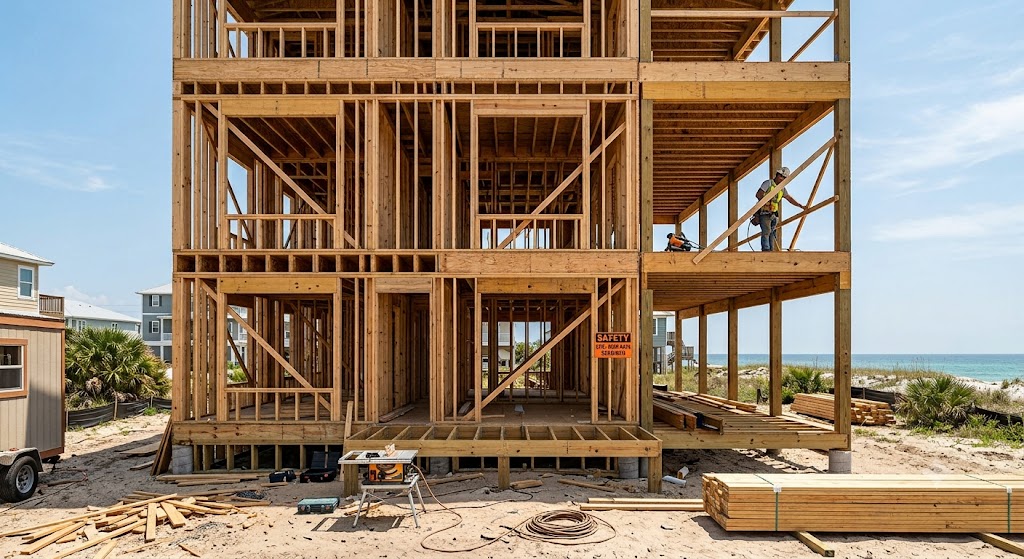
New construction is having a real moment on this coast right now. Between the elevated builds going up in Cape San Blas communities like Ovation and the infill homes finishing out in Port St. Joe, more of my buyers are choosing a brand new home over a resale than at almost any point I can remember. I like that trend. A new home means new systems, current flood zone construction standards, and none of the deferred maintenance you inherit with an older place. It also means a different buying process than the one most people are used to, and a good number of buyers walk into it not realizing that Florida just handed them a meaningful new layer of protection.
As of July 1, 2025, state law requires builders to back every newly constructed home with a one-year statutory warranty. If you're shopping new construction right now, that warranty is already working in your favor. Here's exactly what it does, what it doesn't, and how to build the rest of your due diligence around it.
What the new warranty covers, and what it leaves to you
The statute applies to any newly built single-family home, duplex, triplex, or quadplex that hasn't been previously occupied, and the clock starts the day you take title or move in, whichever happens first. For one full year, the builder is on the hook to fix construction defects in materials, equipment, or workmanship that amount to a material violation of the Florida Building Code, meaning something serious enough to risk physical harm or meaningfully impair one of the home's major systems. If you buy a home that's still inside that first year from a previous owner, the warranty transfers with it, which is worth knowing if you're eyeing a spec home that already changed hands once.
It's a genuinely good tool, and it's also worth knowing where its edges are so you're not caught off guard. The warranty doesn't cover normal wear and tear or ordinary house settling, which is expected in any new build. It doesn't cover appliances or equipment that already carry their own manufacturer warranty, since those are handled directly through the manufacturer. And it won't step in for storm damage, lightning, or other acts of God, or for anything caused by work you or a future owner does to the home after closing. None of that is a knock against the law. It's simply a defect warranty, not an all-purpose insurance policy, and understanding that distinction up front means you'll know exactly which door to knock on if something comes up in year one: the builder for a code-level defect, your homeowners policy for storm damage, or the appliance manufacturer for a broken dishwasher.
Buying a spec home is a different contract than building custom
If you've priced out a custom build on Cape San Blas, you already know that process runs on detailed specs and, often, a cost-plus contract where the final number can move with material pricing. Buying a spec or builder-sold home is simpler in a lot of ways. The price is usually set upfront, the home already exists or is well underway, and the contract is often a standardized form rather than something drafted line by line for your project.
What matters most for you as the buyer is the inspection window built into that contract. It's common for spec-home contracts to give buyers roughly fifteen days to inspect the property, and once that period closes, your earnest money is largely locked in. That's not a reason to rush a decision. It's a reason to move efficiently: schedule your third-party inspection early, walk the property with a checklist, and raise anything you want addressed while you're still inside that window. I sit down with every buyer moving into a builder contract and map that timeline out on day one, so they know exactly when their protections change.
The walkthrough is where you get things fixed before you own them
The final walkthrough, sometimes called a blue tape walkthrough, is your best chance to catch anything that needs fixing before you own it instead of after. Plan to do it one to two days before closing, with a flashlight, a level, and your phone camera in hand. Test every outlet, especially the GFCI outlets near kitchens, bathrooms, and any outdoor space, since Florida's electrical code is strict about them and they're important during storm season. Open and close every door and window, run the appliances, confirm anything the contract says comes with the home is actually installed, and check for the small cosmetic items too: chipped tile, paint touch-ups, cabinet doors that stick.
Anything you find goes on a written punch list with a completion date the builder signs off on. If the builder hasn't finished the agreed repairs by closing, you have real options: you can push the closing date, or you can negotiate an escrow holdback that keeps some funds back until the work is done. What you don't want to do is close on a verbal promise that something will get fixed later. Before closing, an unfinished item is something you can hold up until it's done right. After closing, it's a warranty claim, and while that new one-year warranty gives you real backup, it still takes longer to resolve a problem after the fact than to simply get the builder to finish the punch list before you sign.
A few more things worth confirming before you close
Before you finalize a new construction purchase anywhere in Mexico Beach, on St. George Island, or elsewhere on this coast, a short list of confirmations goes a long way:
- Certificate of Occupancy status. Gulf County's Building Department can confirm whether the home has cleared final inspections and has an active CO or Certificate of Completion.
- Flood zone and finished floor elevation. Ask the builder directly what flood zone the lot sits in and how the finished floor elevation compares to base flood elevation, and request the elevation certificate if one exists. This is also the moment to have that conversation with your insurance agent, since it's a due-diligence step, not something to sort out before you even make an offer.
- Wind mitigation features. New construction on this coast is typically built to current hurricane standards, and features like impact windows and modern roof-to-wall connections often qualify for real wind mitigation credits. Worth confirming what's documented so your insurance quote reflects it.
- Your own representation. The agent sitting in the builder's sales office is often an employee of the builder. Having your own agent in the room from the first visit means someone is looking out for your side of the contract, your upgrade pricing, and your negotiating room, not just the sale.
None of this is complicated once you know the sequence. It's exactly the kind of process I walk buyers through before they ever sign a builder contract, whether it's a finished spec home in Ovation or a home still framing out at WindMark Beach.
New construction on the Forgotten Coast is a strong option right now, and between the new statutory warranty and a properly run walkthrough, buyers have more built-in protection than they did just a year ago. If you're looking at a spec home or considering a builder contract anywhere from Cape San Blas to St. George Island, give me a call or send a text before you sign anything. I'll walk the contract and the property with you so you know exactly what you're getting and exactly what's covered.
Frequently Asked Questions
Does Florida's new home warranty law apply to every new construction purchase on the Forgotten Coast?
It applies to newly built single-family homes, duplexes, triplexes, and quadplexes that haven't been previously occupied, including modular and factory-built homes that meet those criteria. It covers homes conveyed on or after July 1, 2025, and the one-year period runs from the date of title transfer or initial occupancy, whichever comes first.
What's the difference between the builder's warranty and my homeowners insurance?
The builder's warranty covers construction defects that violate the Florida Building Code in a material way, things like faulty workmanship or defective materials. It doesn't cover storm damage, flooding, or normal wear. Your homeowners, wind, and flood policies handle those separate risks, which is why new construction still needs a full insurance conversation even with the warranty in place.
Should I still get an independent inspection on a new construction home?
Yes. A third-party inspector works for you, not the builder, and can catch issues during the walkthrough that are easier to fix before closing than after. Many buyers also schedule a pre-drywall inspection earlier in the build to check framing, plumbing, and electrical before the walls close up.
What happens if the builder hasn't finished punch list items by my closing date?
You have options. You can push the closing date until the work is complete, or negotiate an escrow holdback that keeps a portion of funds back until the builder finishes the agreed repairs. Get any completion date in writing rather than relying on a verbal promise.
Is buying a spec home different from working with my own custom builder?
Yes. Spec homes are typically sold at a set price using a standardized contract with a defined inspection period, often around fifteen days, after which earnest money is largely non-refundable. Custom builds usually involve detailed specifications and can carry cost-plus pricing that moves with material costs. Knowing which contract you're signing changes how you should plan your timeline.
If you're looking at new construction anywhere from St. Joe Beach to Cape San Blas and want someone in your corner before you sign a builder contract, give me a call or send a text. I've spent 27 years on this coast watching these deals come together, and I'm glad to walk the property and the paperwork with you.
About Billy Joe Smiley: Billy Joe Smiley is one of Florida's most accomplished real estate professionals, with over 27 years of experience and more than 1,000 properties sold. As a top 1% REALTOR® based at Port Realty Group, Billy Joe serves the Forgotten Coast with unmatched insight, professionalism, and care. He works with buyers and sellers across Port St. Joe, Cape San Blas, Mexico Beach, and St. George Island, specializing in luxury and waterfront homes, investment properties and 1031 exchanges, beachfront and bayfront land, vacation homes and income-producing real estate, and real estate development and architectural planning. A Gulf County native, Billy Joe pairs deep local knowledge with decades of experience in brokerage, land development, custom home building, and architectural consulting. Recognized as The Forgotten Coast's Most Trusted Realtor, Billy Joe has earned 90+ public reviews across Zillow, Google, and Realtor.com. Learn more about Billy Joe.
Enjoy this blog post? Click here to subscribe for updates
Leave A Comment